
Description
Buttercup family (Ranunculaceae)
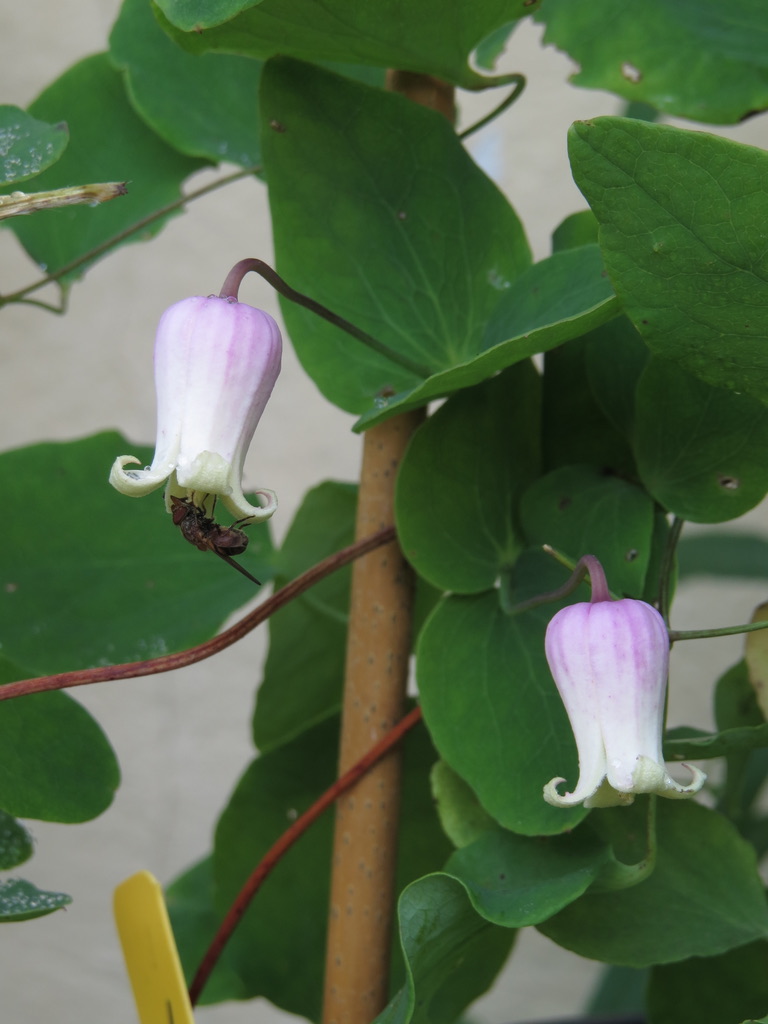
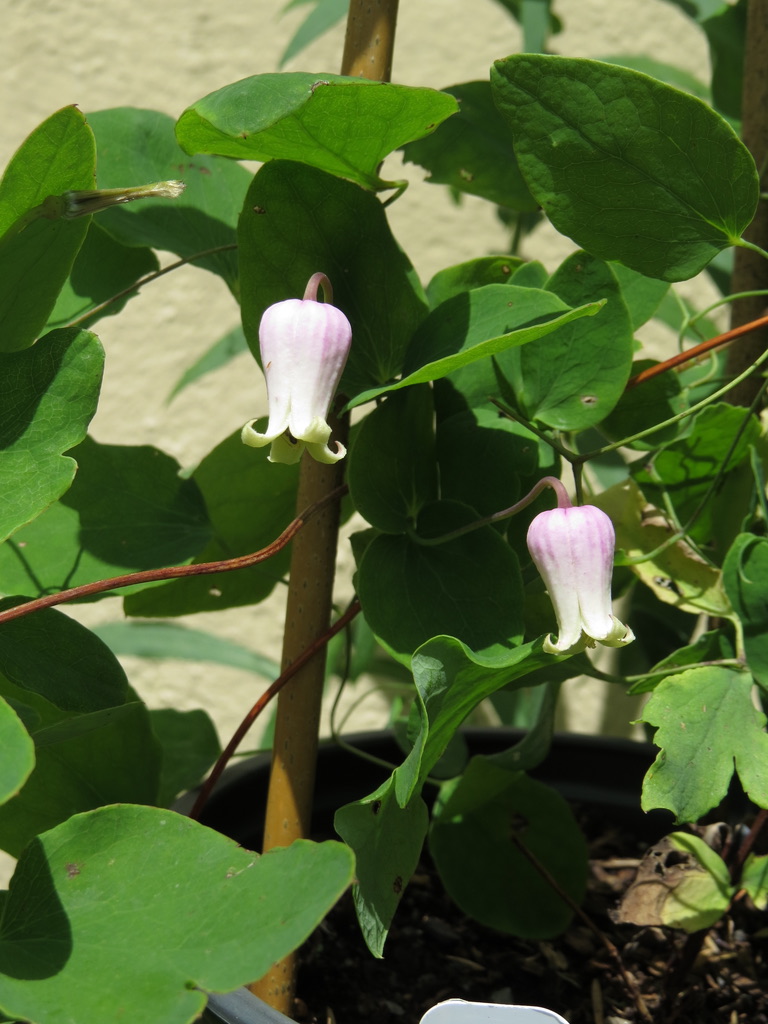
There are a number of quite attractive native species in the genus Clematis, most with pendant, bell-shaped flowers, many with “Leather Flower” in the common name, referring to the thick, colorful sepals of the flower – they have no petals which normally compose the colorful part of the flower! Why they are not more commonly available in horticulture is a bit of a mystery. True, the vines are never as covered in flowers as modern dinner-plate hybrids so they never put on an ostentatious show, but they possess a subtle charm and it’s always a pleasure to be surprised by their appearance in a garden.
The different species can be a bit of a challenge to tell apart, and flower form and color often varies considerably within species making it even more of a challenge. We’ve played around with a number of species over the years, but simply haven’t had as much time to devote to propagating them as we’d like. Seed sources are limited (again, why more native plant nurseries aren’t growing native clematis and/or offering seed is a bit of a mystery to us). The other challenge is that we suspect species hybridize – seeds obtained from nursery sources where a number of native clematis species may be growing in the same vicinity may have an uncertain degree of introgression from allospecific pollen sources. Collection of seeds from the wild would be best, but impractical for us because none of the species grow wild near us. This would be less of a problem if the various native species had little intraspecific variation – hybrids would be fairly readily identifiable. But, as alluded to previously, native clematis show a wide range of variation in flower color and form, making it hard to determine when hybridization has occurred.
Updated 24 December 2024


